Salt Therapy (Halotherapy) in Brooksville, FL
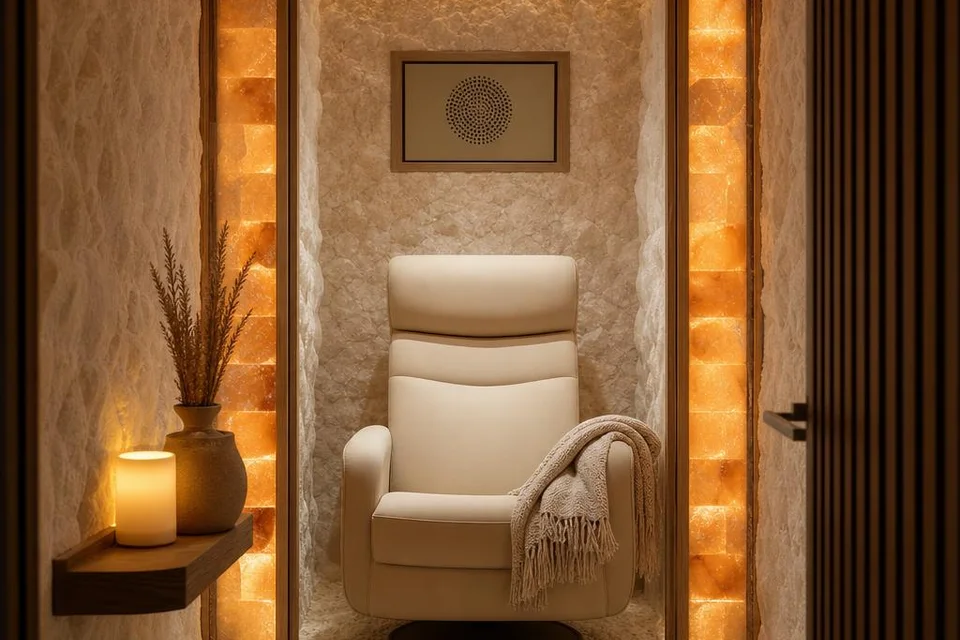
You may have heard a friend describe sitting in a salt room and leaving feeling calmer, or seen salt therapy mentioned alongside allergies, sinus pressure, or skin. In Florida, where pollen season can feel endless and humidity sits heavy for months, it is natural to be curious about anything that promises easier breathing.
This page explains what salt therapy is, where the idea came from, what the research does and does not show, who should check with a clinician first, and what a quiet session might feel like. It is written for readers in Brooksville, Spring Hill, Weeki Wachee, and nearby towns who want straightforward information. We are deliberately careful in what we claim, because your lungs and your health deserve honesty more than hopeful marketing.
What is salt therapy, or halotherapy?
Halotherapy comes from the Greek word for salt. In modern spas it usually means sitting or reclining in a room while a device called a halogenerator grinds pharmaceutical grade salt into very fine particles and releases them into the air. You breathe normally, rest, and the fine salt settles on surfaces and skin.
This is called dry salt therapy. It is different from simply sitting in a room decorated with salt blocks or salt lamps, which do not release meaningful amounts of salt into the air. It is also different from a saline nebulizer that a doctor may prescribe, which delivers a measured liquid solution for a specific medical purpose.
The idea grew from observations about historic salt mines in Eastern Europe, where some visitors reported easier breathing. Those stories are interesting, but they are not the same as controlled evidence.
Because the salt used is very fine and dry, it does not feel like sea spray or a damp mist. Most people barely notice it in the air at all. In many salt rooms, the setting itself is the most noticeable part: quiet seating where you can rest without anything to do.
What does the evidence actually show?
The short answer is that the evidence is limited. The American Lung Association has described halotherapy as a promising placebo and notes there is not enough good research to recommend it for lung conditions. Studies tend to be small, and many are not well controlled.
That means we will not tell you salt therapy treats asthma, COPD, allergies, sinusitis, or any respiratory disease. It is not approved by the FDA to treat any condition, and it should never replace inhalers, prescribed medicines, or a breathing plan from your doctor.
What people often do report is that the experience feels restful. A quiet, softly lit space, comfortable seating, and unhurried time away from your phone can be calming in its own right. That is worth describing honestly, without dressing it up as medicine.
When reading about salt therapy online, look at who is making the claim. Websites selling salt rooms or equipment have reasons to sound confident. Independent health organizations, such as lung associations or government health agencies, tend to describe the evidence more cautiously, and their summaries are a better guide when deciding whether something is worth your time.
American Lung Association: Promising Placebo, Salt Halotherapy
Salt therapy, allergies, and Florida pollen season
Pollen in Hernando County can arrive early and linger, with oak and pine in spring and grasses later in the year. It is understandable to look for relief wherever you can find it, and allergies are one of the most common reasons people look into salt therapy.
Some people say their nose and throat feel clearer after a session, while others notice nothing, and a few find the fine particles irritating. Research has not shown that salt therapy reliably improves allergies or sinus symptoms. Your doctor or an allergist remains the right person to help you manage seasonal allergies, sinus infections, or ongoing congestion.
If you do try it, treat it like any new experience. Go once, notice how you feel during and afterward, and stop if anything feels uncomfortable. If breathing symptoms appear or persist, seek medical advice.
Who should check with a clinician before trying salt therapy
Please speak with your doctor before trying salt therapy if you have asthma, COPD, emphysema, cystic fibrosis, or any other lung condition. Fine particles can trigger coughing or tightness in some people, and your clinician knows your breathing history.
The same applies if you have high blood pressure that needs a low salt diet, a heart condition, a recent respiratory infection or fever, open wounds or broken skin, or are pregnant. Anyone with a contagious illness should wait until they are well, for their own comfort and for others.
If you use an inhaler, bring it with you. If you feel short of breath, wheezy, dizzy, or unwell at any point, leave the space and tell a team member right away.
Families sometimes ask whether children or older relatives can join a session. Please ask the pediatrician or the relative's own clinician first, particularly if breathing, heart, or blood pressure concerns are involved. Ask GLO directly about current availability for younger guests. If you are accompanying someone with limited mobility or memory changes, call ahead and ask whether the setting will suit them.
What a quiet salt therapy session might feel like
Most salt therapy sessions follow a simple pattern. You wear your everyday clothes, settle into a comfortable seat, and rest while fine salt is released into the air. You might notice a faint salty taste on your lips. Some people read, some close their eyes, and some simply breathe.
Because we have not yet confirmed the details of GLO's salt therapy setup, timing, and availability for this page, we are not describing a particular room, device, or session length. Ask about salt therapy when you book or call, and ask what is available and what to expect.
Afterward, you can brush any salt from your clothes and hair. Drinking water is a pleasant way to finish, and there is nothing else special you need to do.
Salt room, salt cave, or saline nebulizer: what is the difference?
These three phrases are often used as if they mean the same thing, but they do not. A salt room is usually an ordinary room fitted with seating and a halogenerator that releases fine dry salt into the air. Walls and floors may be lined with salt for atmosphere, but the device is what puts salt into the air you breathe.
A salt cave is a similar idea built to look like a natural cave, often with thick salt walls and dim lighting. It may or may not have a halogenerator. If it does not, the salt on the walls is mostly decorative.
A saline nebulizer is a medical device that turns a measured liquid salt solution into a mist you inhale through a mouthpiece or mask. It is used under a clinician's direction for specific conditions. Spa salt therapy is not a substitute for a nebulizer your doctor has prescribed.
How often do people try salt therapy?
Spas that offer salt therapy often suggest a series of sessions, and you may see claims that a certain number is needed before anything happens. Be cautious about that kind of advice, because there is no strong evidence for any particular schedule.
A sensible approach is to try one session, see whether you enjoy it and how you feel, and decide from there without committing to a package. If you notice coughing, irritation, or tightness, it is probably not for you, and that is perfectly fine.
If you are trying it alongside medical care for a breathing condition, keep your clinician informed so they can see the whole picture. Never reduce or stop a prescribed medicine because you feel better after a session.
For people coming from Spring Hill, Weeki Wachee, or farther afield, it can help to pair a salt therapy inquiry with a massage or facial you already planned, so one trip covers both.
Salt therapy for skin, stress, and sleep
Some people try salt therapy hoping it will help skin conditions such as eczema or psoriasis. There is little reliable research to support that, and salt can sting broken or inflamed skin. Your dermatologist is the best guide for skin conditions.
Others come mainly for the stillness. Taking time to sit quietly can feel restorative, and many people say they feel calmer afterward. We see that as the honest heart of salt therapy: a gentle pause, not a cure.
If sleep or anxiety is troubling you, talk with your doctor. A calming experience can be one small part of looking after yourself, alongside the care they recommend.
Pairing salt therapy with massage or sauna
Some spas suggest combining salt therapy, infrared sauna, and massage in one visit. If you are interested, ask us what is available on the day you plan to come. Start gently, because combining heat and several experiences can be tiring, particularly for older adults or anyone managing blood pressure.
A simple approach is to try one new experience at a time so you know how your body responds. Our infrared sauna guide explains that option in the same honest way.
How we do this at GLO
Halo salt therapy is something you can ask us about at GLO. It is not currently listed as a separate bookable service in our Meevo menu, and we have not published a duration or price for it. To ask, mention it when you book a service or call GLO, and ask what is available, how a session works, and whether it may suit you. Salt therapy is not a medical treatment, and anyone with a lung or heart condition should check with their clinician first. Questions about comfort, clothing, or access are worth asking before you decide.
Ask us about Salt Therapy when you book
Book a ServiceFrequently asked questions
What is salt therapy and how does it work?
Salt therapy, or halotherapy, means resting in a space where very fine dry salt particles are released into the air while you breathe normally. Proponents suggest the salt may affect the airways, but good evidence is limited. Most people describe it as a calm, restful experience.
Does salt therapy help allergies?
Some people say they feel clearer after a session, but research has not shown that salt therapy reliably helps allergies. It is not a replacement for allergy medicine or advice from your doctor. If you try it, notice how you feel and stop if anything is uncomfortable.
Is salt therapy good for asthma?
The American Lung Association says there is not enough evidence to recommend halotherapy for lung conditions, and fine particles may trigger symptoms for some people. If you have asthma, talk with your doctor first, keep your inhaler with you, and never stop prescribed treatment.
Is a salt lamp the same as salt therapy?
No. A salt lamp is a decorative block of salt with a light inside. It does not release meaningful salt particles into the air. Dry salt therapy uses a device that grinds salt into fine particles for the air you breathe.
Can I book salt therapy at GLO online?
Salt therapy is not currently a separate bookable item in our Meevo menu. Ask about salt therapy when you book a service, or call, to learn what is currently available.
How long is a salt therapy session at GLO?
We have not published a session length for salt therapy yet. Ask when you book or call for current details, rather than relying on a general number from elsewhere.
Is salt therapy safe for children?
Please ask your child's pediatrician before trying salt therapy, especially if your child has asthma or another breathing condition. Ask GLO directly about current availability for younger guests.
Where can I find salt therapy near Brooksville, FL?
GLO Therapeutic Spa at 947 W. Jefferson Street in Brooksville is happy to talk with you about halo salt therapy. Ask when you book a service through Meevo, or call. It is a short drive from Spring Hill, Weeki Wachee, and Inverness.
By GLO Therapeutic Spa team · Last reviewed: